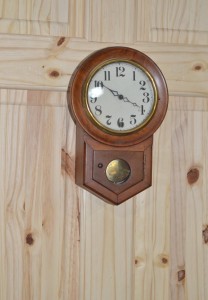
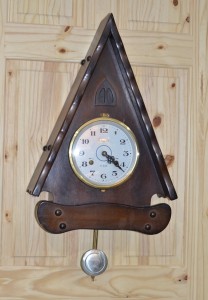
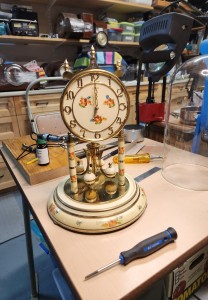
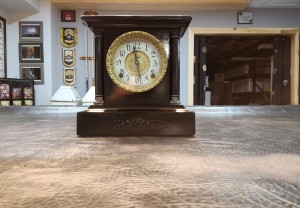
📍 St. Georgen, Black Forest, Germany
📅 Period of activity: Late 19th century – 1970s
Eduard Herr Söhne was founded in the late 19th century in the heart of Germany’s Black Forest, a region internationally recognized for its long-standing clockmaking tradition. Established by Eduard Herr, the company quickly built a solid reputation for producing reliable, well-crafted mechanical clock movements.
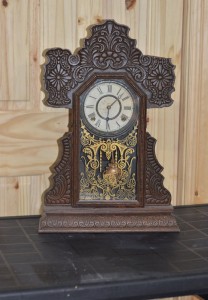
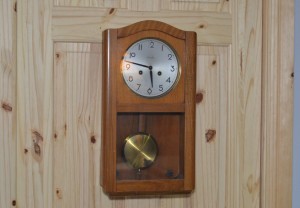
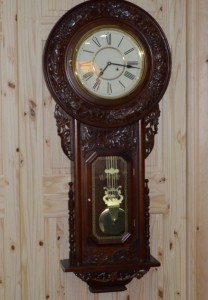
Located in St. Georgen, one of the most important horological centers of the Black Forest, the firm specialized in the manufacture of movements for wall clocks, longcase clocks, and mantel clocks. From its earliest years, Eduard Herr Söhne became known for its technical precision, consistency, and durable construction—qualities that helped the brand gain recognition well beyond Germany’s borders.
Eduard Herr Söhne developed a strong reputation for manufacturing robust mechanical movements, including both spring-driven and weight-driven mechanisms. These movements were widely used in traditional pendulum clocks, wall clocks, and chiming clocks featuring bim-bam or Westminster chime systems.
Key characteristics of EHS movements include:
Solid brass construction
Precise and reliable gear trains
Long service life and ease of maintenance
Clear, well-balanced timekeeping and striking mechanisms
Throughout the first half of the 20th century, the company exported extensively across Europe and North America, becoming a trusted supplier for many clock manufacturers and retailers.
Like many historic clockmakers, Eduard Herr Söhne faced increasing challenges during the mid-20th century. The effects of two world wars, combined with the rise of electric and later quartz clock technology, gradually reduced demand for traditional mechanical movements.
By the 1960s, production had slowed significantly, and the company eventually ceased operations. Despite this, many original EHS movements remain in excellent working condition today, a testament to their solid engineering and craftsmanship.
Today, Eduard Herr Söhne is regarded as a respected name in the history of German horology. Its movements continue to be restored and appreciated by collectors, clockmakers, and enthusiasts around the world. The brand stands as a symbol of the Black Forest tradition—where precision, durability, and mechanical excellence defined generations of clockmaking.
Origin: St. Georgen, Black Forest, Germany
Founded: Late 19th century by Eduard Herr
Specialty: Mechanical movements for wall clocks, longcase clocks, and mantel clocks
Main period of activity: c. 1890 – 1960s
Reputation: Reliability, precision, and long-term durability
Legacy: A major reference in traditional German horology

 Française